mechana.ai
Mechana builds ambitious software for specialized real-world domains, with carefully engineered intelligence under the hood.
Mechana builds ambitious software for specialized real-world domains, with carefully engineered intelligence under the hood.
 tameyeti
A place to put things so you can find them again. Movie recommendations. Restaurant names. Book titles. Ideas, names, places, half-formed thoughts. You don't decide where anything goes. You just capture it.
tameyeti automatically recognizes what you record and keeps it in order for you. A movie recommendation ends up with movies. A place ends up with places. An idea stays connected to what it relates to — without you opening lists, folders, or deciding anything up front.
 pesavaca
An iPhone app that estimates cattle weight using the phone's LiDAR sensor. It captures a real depth scan of the animal, finds two anatomical points with a trained computer vision model, and runs the measurements through a veterinary weight formula — all on-device, no internet needed in the field. Built for a Colombian cattle operation; the point-detection model is trained on a public dataset of dairy cattle and fine-tuned on Zebu/Brahman photos to match the actual breeds it's used on.
 ORION Protocol
AI agents almost universally do not debug in the true sense of debugging. They loop through pattern match solutions looking solely at your source code. With many types of bugs, this is an anti-pattern.
ORION PROTOCOL breaks the cycle by forcing agents into empirical mode — probe the running system, record what actually happens when the code runs, discard theories that don't survive contact with reality. Science.
 ai-mycelium
Routes Telegram messages to Claude Code agents via Redis. Multiple agents, separate bots, session persistence keyed by issue number, MCP integration for Claude Desktop participation. Message a bot and get a Claude Code agent running against your actual repo. Access-tiered: trusted users get full CLI dispatch, guests get API-only.
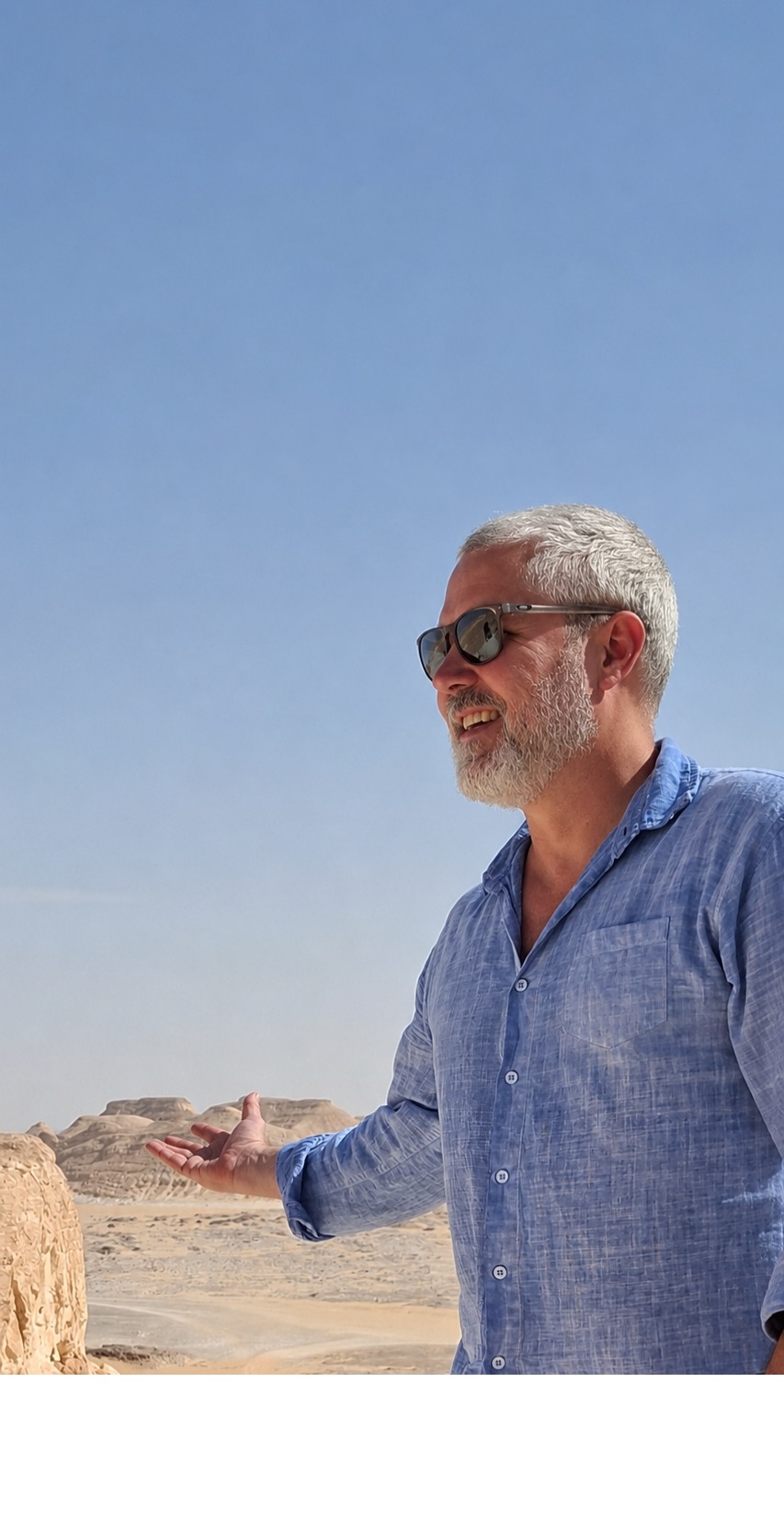
I started in fintech in the nineties building fraud prevention systems. Architecture pulled me away from it — I went back to school and came out with a master's from SCI-Arc.
For fifteen years I ran a design firm in Los Angeles working across buildings, branding, and luxury residential projects. I taught studios at SCI-Arc and juried at UCLA, ArtCenter, and IFA Paris.
Then software got interesting again.
I returned to development through PassNinja, where I started as a junior developer and later became lead. After that I worked with Suffolk Construction on a 3D AI-driven system for generating high and mid-rise architectural plans, and later helped guide the upgrade of a massive enterprise dispatch and billing platform.
Over the past year I founded and shipped a production AI application for iOS and Android built around coordinated AI-agent workflows as part of daily development infrastructure.
I have degrees in philosophy, economics, and architecture. I restore old sailboats, occasionally join offshore deliveries, trek, play guitar, and have lived in roughly fifty countries.
mechana.ai runs a multi-agent engineering environment where each agent carries a distinct identity. That is not affectation: humans have modeled others since long before language, and keeping agents clearly distinct as characters affects how requests are framed, which in turn affects how they respond. The personality assignment is practical infrastructure, not flavor.
The coordination layer is ai-mycelium: Telegram webhooks feed a Redis queue, the dispatcher routes to per-agent Claude CLI workers, sessions persist by issue number across restarts. Each agent has a dedicated bot, its own git identity, and defined scope.